Screens in Service of Learning: A Parent's Guide to Intentional Technology Use in K–12 Education

Photo: Leendert Adriaan van Es, CC BY-SA 4.0, via Wikimedia Commons
Walk into almost any American school today and you will find screens—tablets on desks, interactive whiteboards at the front of the room, laptops open during independent work time. The technology is everywhere, and in many cases, it arrived quickly, driven by well-intentioned enthusiasm and, in some instances, the pressures of the COVID-19 pandemic, which forced a rapid and often unplanned shift to digital instruction.
Now, several years on, educators, researchers, and parents are asking a more careful question: Is all of this technology actually making students better learners? The answer, it turns out, is complicated—and it depends almost entirely on how the technology is being used.
At Marlton School, we have thought carefully about this question. Our approach to educational technology is neither reflexively resistant nor uncritically enthusiastic. It is intentional. And we believe that parents deserve a clear explanation of what that means in practice.
What the Research Actually Says
The popular assumption that digital natives are best served by digital classrooms has not held up particularly well under scrutiny. A growing body of research suggests that the relationship between screen time and academic outcomes is not linear—and that beyond a certain threshold, increased technology use in schools is associated with diminished rather than improved learning.
A frequently cited analysis published in Computers & Education found that students who used laptops in lecture-based settings performed significantly worse on comprehension assessments than peers who took notes by hand. The researchers hypothesized that handwriting, which is slower and more deliberate, encourages students to process and synthesize information rather than transcribe it verbatim. The laptop, in other words, made note-taking faster—and shallower.
Separate research on elementary-age students has raised concerns about the effects of extended screen engagement on sustained attention and executive function. The American Academy of Pediatrics has consistently recommended limits on recreational screen time for children and adolescents, citing developmental considerations that do not disappear simply because a screen is labeled "educational."
None of this means that technology has no place in schools. It emphatically does. But it does mean that the presence of technology is not, by itself, evidence of rigorous or effective instruction.
The Hidden Risks of Over-Digitization
Beyond the learning outcomes data, there are subtler risks associated with schools that have allowed technology to become the dominant medium of instruction rather than one tool among many.
The displacement of deep reading. Extended engagement with long-form text—novels, primary source documents, complex nonfiction—develops cognitive capacities that skimming digital content does not. When screens replace books rather than supplementing them, students may lose sustained reading stamina at precisely the age when it is most important to build it.
The erosion of handwriting and its cognitive benefits. Research from neuroscientists including Karin James at Indiana University has demonstrated that the physical act of forming letters activates neural pathways associated with reading and memory in ways that typing does not. Reducing handwriting instruction in favor of keyboard-based work may inadvertently limit literacy development, particularly in younger students.
Social and emotional displacement. Learning is fundamentally relational. The conversations, negotiations, and collaborative problem-solving that occur between students—and between students and teachers—are not merely pleasant additions to academic work. They are, in many cases, the work itself. Classrooms that route too much interaction through screens risk thinning the human connections that make learning meaningful.
Passive consumption masquerading as engagement. A student watching an educational video may appear engaged. But passive viewing and active thinking are not the same thing. Technology that delivers content without requiring students to wrestle with it, question it, or apply it offers the appearance of learning without necessarily producing it.
What Intentional Integration Looks Like at Marlton
At Marlton School, our technology integration decisions are guided by a straightforward question: Does this tool enhance the learning, or does it replace it? When the honest answer is the latter, we choose a different approach.
In practice, this means several things:
Technology as a tool of creation, not just consumption. Marlton students use digital tools to produce—to write, design, research, and present—rather than primarily to receive content. A student who uses video-editing software to document and explain a scientific process is engaging in substantive cognitive work. A student who watches a pre-recorded explanation is not, at least not in the same way.
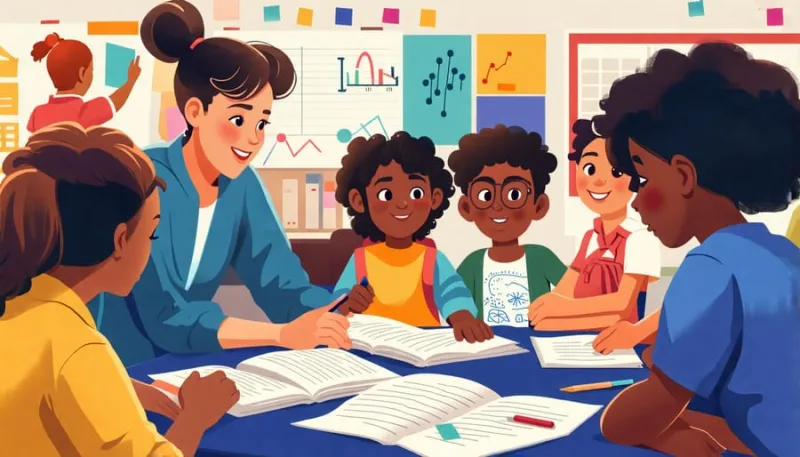
Protected time for analog work. Across all grade levels, Marlton preserves significant instructional time for activities that do not involve screens: handwritten journals, physical manipulatives in math, face-to-face Socratic discussions, long-form reading of printed texts. This is not nostalgia. It is a deliberate recognition that different cognitive tasks are served by different media.
Teacher primacy in the learning relationship. No platform, however sophisticated, replaces the judgment, responsiveness, and relational intelligence of a skilled teacher. At Marlton, technology supports instruction; it does not direct it. Our teachers select tools based on specific pedagogical goals, not because a product is new or prominently marketed.
Transparent communication with families. We recognize that what happens at school does not stay at school. Screen habits, like all habits, carry over. We actively communicate with families about how and why we use technology in the classroom, so that parents can make informed decisions about screen use at home and understand the reasoning behind our choices.
A Framework for Families
For parents navigating these questions at home, a few guiding principles may be useful:
- Ask what your child is doing with screens, not just how long. Forty-five minutes of writing a persuasive essay is not equivalent to forty-five minutes of scrolling. Duration matters, but so does purpose.
- Preserve device-free time. Meals, outdoor play, and family conversation are not inefficiencies to be optimized away. They are essential contexts for the social and emotional development that no app replicates.
- Encourage boredom occasionally. Unstructured time without digital stimulation is not wasted time. It is the condition under which imagination, creativity, and self-directed curiosity tend to emerge.
- Talk to your child's teachers. At Marlton, we welcome these conversations. Understanding the pedagogical rationale behind technology use—or its absence—helps families reinforce the school's approach at home.
The Deeper Goal
Marlton School's mission is to prepare students not merely to function in a digital world, but to lead thoughtfully within it. That requires graduates who understand technology as a set of tools with both capabilities and limitations—students who can choose the right instrument for a given task rather than defaulting to whatever screen is nearest.
That kind of discernment is not developed by maximizing screen time. It is developed by giving students rich, varied, and sometimes deliberately analog learning experiences—and by trusting that deep learning, however it is facilitated, is always the goal.