Hands On, Minds Open: How Real-World Projects Unlock Academic Confidence in Every Type of Learner
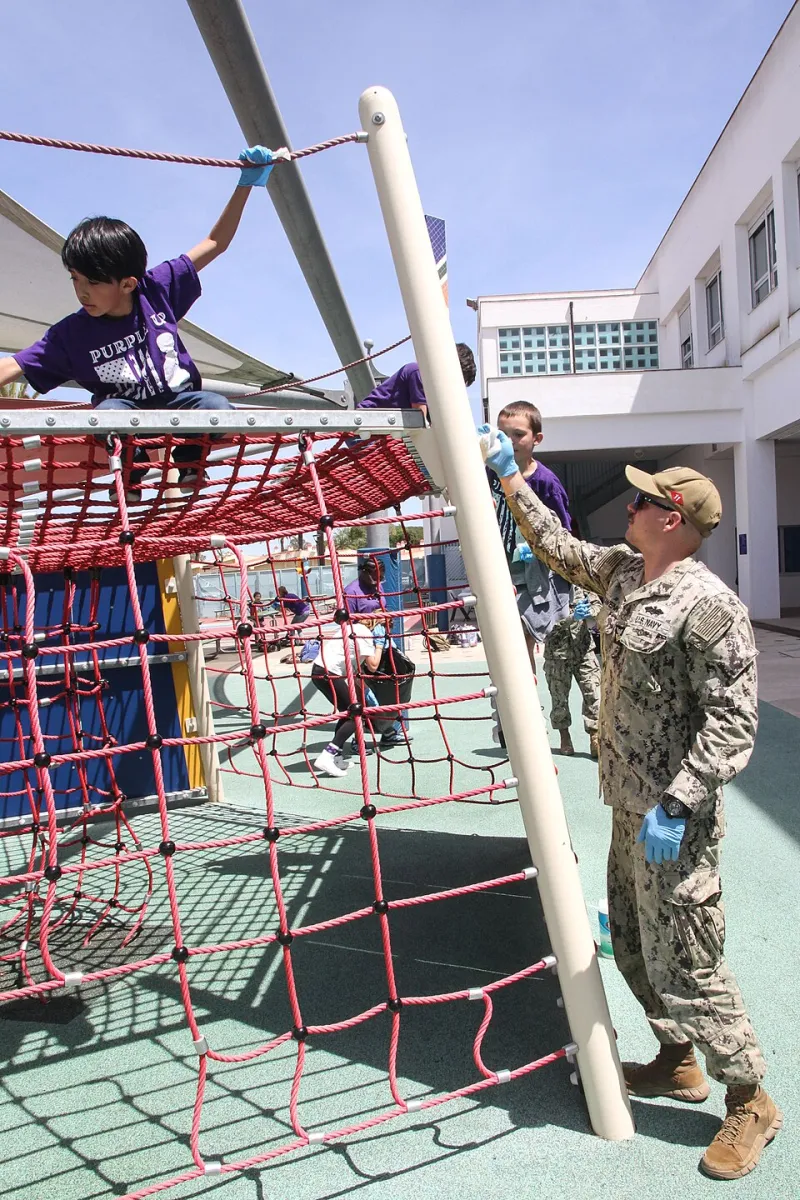
Photo: U.S. Navy photo by Courtney Pollock, Public domain, via Wikimedia Commons
There is a particular kind of student who falls through the cracks of conventional instruction — not because they lack intelligence or effort, but because the format of traditional schooling simply does not match the way their mind engages with the world. They tune out during lectures. They struggle to locate motivation in abstract exercises. They perform inconsistently on standardized assessments that measure recall far more than reasoning. And over time, they begin to internalize a damaging conclusion: that academic success is not for them.
Project-based learning challenges that conclusion at its root. By anchoring academic content in real problems, authentic audiences, and tangible outcomes, it creates conditions in which a far broader range of learners can experience genuine intellectual engagement — often for the first time.
At Marlton School, project-based learning is not treated as an enrichment activity reserved for advanced students or a remedial intervention for struggling ones. It is a core pedagogical approach embedded across the curriculum, particularly in the middle and upper school years when adolescent learners are most hungry for work that feels relevant and most vulnerable to disengagement when they cannot find it.
What Project-Based Learning Actually Looks Like
The term "project-based learning" is sometimes misunderstood as a reference to dioramas, poster boards, or end-of-unit presentations — activities that add a creative layer to otherwise unchanged instruction. Genuine project-based learning, as implemented at Marlton School, is structurally different.
In a project-based unit, the driving question comes first. Students are presented with a problem or challenge that is complex enough to require sustained investigation: How might we design a more equitable public transportation system for our city? What can historical epidemics teach us about modern public health responses? How does the mathematics of compound interest affect long-term financial security for low-income households?
These questions do not have tidy answers retrievable from a textbook. Pursuing them requires students to draw on multiple disciplines simultaneously, manage their time across an extended timeline, collaborate with peers whose strengths differ from their own, and ultimately produce something — a proposal, a presentation, a prototype, a published argument — that can be evaluated against real-world standards rather than a standardized rubric.
The content knowledge is still there. The algebra, the historical analysis, the scientific reasoning — these are all present and rigorously assessed. But they are encountered in the context of a problem that students have a reason to care about, which changes the nature of the learning experience entirely.
The Confidence Shift: Why Hesitant Learners Respond
For students who have come to associate school with failure or frustration, the structure of project-based learning offers something that traditional instruction often cannot: multiple, varied pathways to demonstrate competence.
A student who freezes during written exams may prove to be an exceptional verbal communicator during a project presentation. A student who struggles with abstract symbolic reasoning may excel at the spatial thinking required to design a functional prototype. A student who has never experienced academic recognition may discover that their persistent curiosity about a niche topic makes them the most valuable researcher on their team.
This diversification of how intelligence is expressed and recognized is not a lowering of standards. It is a broadening of the definition of academic rigor to include the skills — synthesis, communication, iteration, leadership — that higher education and professional environments consistently identify as most critical.
One Marlton School upper school student who had previously described herself as "not a school person" found her footing during a semester-long urban planning project in which her team proposed redesigns for underutilized public spaces in a nearby community. The research required her to engage with demographic data, municipal policy documents, and architectural principles simultaneously. The final presentation was delivered to a panel that included a working urban planner. "I didn't know I was good at this," she said afterward. "I thought I just wasn't smart in the ways school cares about."
That shift in self-perception — from passive recipient of instruction to active, capable problem-solver — is among the most durable outcomes of well-designed project-based learning.
Critical Thinking as a Practiced Skill, Not an Innate Trait
One of the most consequential misconceptions in American education is the belief that critical thinking is a fixed capacity: either a student has it or they do not. Project-based learning systematically dismantles this assumption by treating critical thinking as a skill that develops through repeated, structured practice.
When a student encounters a driving question with no predetermined answer, they must evaluate sources for credibility, weigh competing interpretations of evidence, identify the assumptions embedded in their own reasoning, and revise their conclusions when new information warrants it. These are not abstract intellectual virtues. They are discrete cognitive moves that can be taught, modeled, and refined over time.
At Marlton School, teachers function as facilitators during project-based units rather than primary knowledge-dispensers. They design the conditions for inquiry, ask questions that deepen rather than redirect student thinking, and provide feedback that is formative — aimed at improving the work in progress — rather than purely evaluative. This shift in the teacher's role is not incidental. It is what creates the space for students to exercise and develop their own reasoning rather than simply receiving and reproducing the teacher's.
Preparing for College and Careers That Reward Independent Thinking
The alignment between project-based learning and the demands of post-secondary education is not coincidental. College faculty across disciplines consistently report that incoming students who struggle most are not those with gaps in content knowledge — those gaps can be addressed — but those who have never been asked to manage an open-ended intellectual challenge independently.
The habits cultivated through project-based learning at the middle and upper school level address this directly. Students who have designed and executed extended research projects arrive at college already familiar with the discomfort of not knowing the answer, the discipline required to sustain effort over weeks rather than days, and the intellectual humility of revising a thesis when the evidence demands it.
In the professional world, this preparation matters even more. The careers that will define the next generation of the American economy — in technology, healthcare, policy, design, and entrepreneurship — are built almost entirely on the ability to identify problems, generate and test solutions, communicate findings clearly, and adapt when initial approaches fail. These are precisely the capacities that project-based learning develops, systematically and intentionally, across the years a student spends at Marlton School.
An Invitation to Engage
For families considering Marlton School, the project-based approach represents a deliberate institutional commitment: a belief that the purpose of education is not the accumulation of information but the development of capable, curious, confident thinkers. Students who may have struggled to see themselves as academic achievers in other settings consistently discover, through sustained engagement with meaningful work, that they have more to offer than any single test score could reflect.
The question is not whether your child is the right kind of student for this approach. The question is whether this approach is the right kind of school for your child's fullest potential.