Taking Away Play to Punish Behavior? The Research Says We Have It Backwards
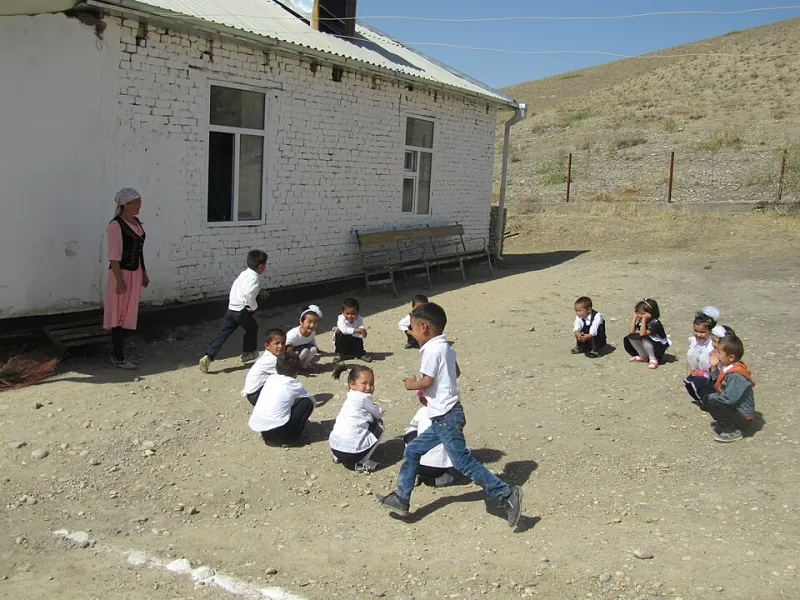
Photo: Shixart1985, CC BY 2.0, via Wikimedia Commons
Walk into enough elementary schools and you will hear the same sentence, delivered with weary authority: "If you can't finish your work, you can't go outside." It sounds reasonable. It is also, according to a substantial body of research, a policy that works against the very outcomes teachers are trying to protect.
The Child Who Loses Recess Is Rarely the Child Who Doesn't Need It
Consider who actually misses recess under withholding policies. It is almost never the child who completed every worksheet and sits calmly in line. It is the child with underdeveloped self-regulation, the one with attention difficulties, the one whose body seems to need movement the way lungs need air. In other words, the consequence lands most heavily on the students least equipped to absorb it.
The American Academy of Pediatrics has stated plainly that recess is a necessary break for children—one that supports cognition, social development, and classroom behavior. The CDC's guidance to schools goes further, describing recess as essential to a well-rounded school day. Neither organization frames it as a reward contingent on compliance.
What Happens in the Brain During Unstructured Play
Executive function—the umbrella term for working memory, impulse control, and cognitive flexibility—is among the most important predictors of academic success. And it develops, in significant part, through play. When children negotiate the rules of a made-up game, wait for a turn on the swings, or recover from losing a race, they are doing the raw neurological work of self-regulation.
Depriving a child of that practice does not teach self-control. It removes the training ground where self-control is built. The parallel would be punishing a struggling reader by taking away their books.
The Counterproductive Math of Withheld Playtime
The classroom logic behind recess withholding is usually academic: more time on task means more learning. But studies of scheduling in schools suggest the opposite. After movement breaks, students show improved attention and increased time-on-task behavior. A child who spends twenty minutes of recess sitting at a desk, frustrated and fidgeting, often costs the classroom more instructional minutes than the break ever would have.
There is also a compounding effect. A child who misses recess repeatedly misses the social encounters where friendships are formed and repaired. Over a semester, the disciplinary tool quietly produces social isolation—which itself predicts further behavior problems. The consequence becomes a cause.
What Disciplinary Alternatives Actually Work
None of this means behavior goes unaddressed. It means consequences should be logical rather than subtractive. A child who disrupts circle time might practice a reset routine. A child who misuses materials might help repair or organize them. Restorative conversations—brief, structured, and calm—teach more than removal ever has.
Schools can also examine the front end: Is the behavior occurring right before recess, suggesting the child is simply depleted? Is the work developmentally appropriate? Often the misbehavior is a signal about the schedule, not the student.
A Standard Worth Holding
Families evaluating schools would do well to ask directly: What is your recess policy, and is play ever used as a consequence? The answer reveals a school's underlying philosophy about children. At Marlton School, we hold that movement and unstructured play are part of the instructional design of the day—not a dessert withheld from children who most need its nourishment.