The Playground as Classroom: What Happens to a Young Brain in Motion
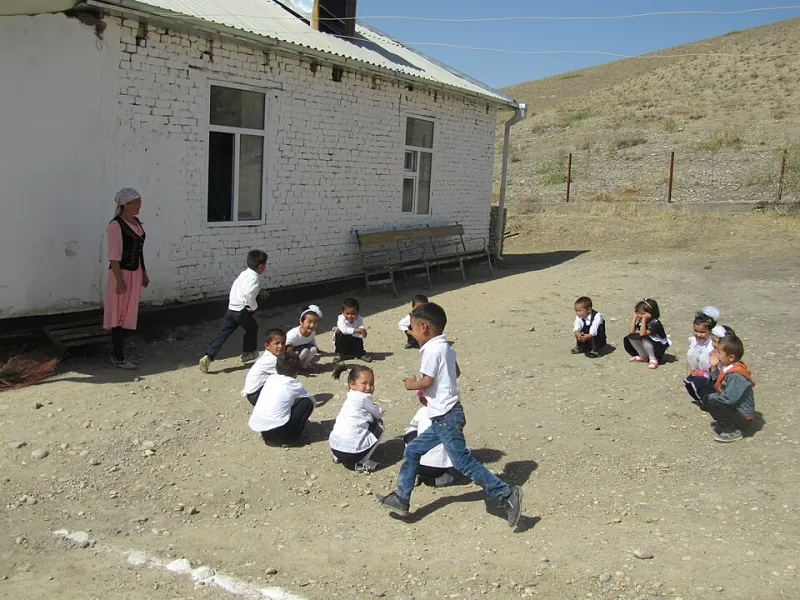
Photo: Nataev, CC BY-SA 4.0, via Wikimedia Commons
At first glance, the scene looks like anything but academics: a cluster of students sprinting across the playground, another group negotiating the rules of an invented game, a child tracing a hopscotch grid with careful concentration. Yet ask a neuroscientist what is happening inside those young brains, and the answer is remarkably close to what happens during a well-taught lesson.
At Marlton School, we have long treated recess, physical education, and movement breaks not as rewards squeezed in when time allows, but as deliberate components of the academic day. The research supporting that choice has grown too substantial to ignore.
The Brain on Movement
When children engage in moderate physical activity—running, climbing, even a brisk walk—their bodies release a cascade of neurochemicals that directly support cognition. Brain-derived neurotrophic factor, or BDNF, often described as fertilizer for neurons, increases with aerobic exercise and supports the growth of new neural connections. At the same time, blood flow to the prefrontal cortex, the region responsible for attention, impulse control, and working memory, rises measurably.
In practical terms, a child who has just spent twenty minutes in active play returns to the classroom with a brain primed to absorb, retain, and apply new information. Studies from researchers at institutions including the University of Illinois have found that students show sharper focus and faster cognitive processing following periods of physical activity compared to periods of seated instruction.
Why Cutting Recess Backfires
Faced with testing pressure and packed curricula, some schools across the country have trimmed recess in favor of additional instructional minutes. The logic seems reasonable: more time on task should mean more learning. The evidence tells a different story.
Research consistently shows that when recess is reduced, on-task behavior declines rather than improves. Children—particularly in the elementary years—have a finite capacity for sustained seated attention. Without regular opportunities to move, that capacity depletes, and the result is fidgeting, distraction, and, in some cases, behavior referrals that cost far more instructional time than recess ever did.
The pattern was documented in a landmark study of schools implementing one of the largest recess-based programs in the nation: after a scheduled play period, students were measurably more attentive and less disruptive. The time invested in movement was returned, with interest, in the quality of the learning that followed.
Unstructured Play Teaches Its Own Lessons
Not all movement is equal, and not all of recess's value comes from exercise. Unstructured play—where children invent games, resolve disputes, and negotiate rules without adult direction—builds executive function skills that structured instruction alone cannot fully develop.
Consider what a single game of four-square demands: turn-taking, emotional regulation after a loss, verbal negotiation, planning, and perspective-taking. These are the same self-management capacities that teachers rely on during independent work and collaborative projects. Play is, in effect, a low-stakes laboratory for the highest-stakes skills.
How Marlton Protects Time for Movement
Our approach weaves movement throughout the day rather than confining it to a single block. Daily recess is protected in the master schedule at every grade level. Physical education is taught by specialists who connect fitness to concepts of goal-setting and perseverance. Teachers use short movement breaks—stretching, standing discussions, walking reviews—to reset attention between academically demanding tasks.
The result is a school day with a natural rhythm: exertion and focus, social energy and quiet concentration, each reinforcing the other.
What Families Can Do at Home
The movement-learning connection does not end at dismissal. Families can extend its benefits with a few deliberate habits:
- Schedule homework after activity, not before. A bike ride or a game of catch before study time can sharpen focus for the work ahead.
- Build movement into routines. Walking to school, taking the stairs, or a family after-dinner walk all contribute to the same cognitive benefits.
- Protect unstructured playtime. Resist the urge to fill every afternoon hour with structured enrichment; free play builds skills that structured activities sometimes crowd out.
- Advocate locally. Parents who value daily recess and quality physical education can be powerful voices in school communities, ensuring these programs remain priorities.
Rethinking What Counts as Learning
The most important shift may be one of perception. When we frame recess as a break from learning, we miss what the science makes clear: movement is learning. It strengthens the very neurological machinery that reading, mathematics, and problem-solving depend upon.
A school day that honors this truth—one that treats the playground as a partner to the classroom rather than its rival—gives students the best of both. At Marlton School, that is not a scheduling compromise. It is an educational conviction, backed by evidence and visible every afternoon on the playground, in the brightest sense of the word.