When the Team Becomes the Teacher: The Surprising Science of Collaborative Learning
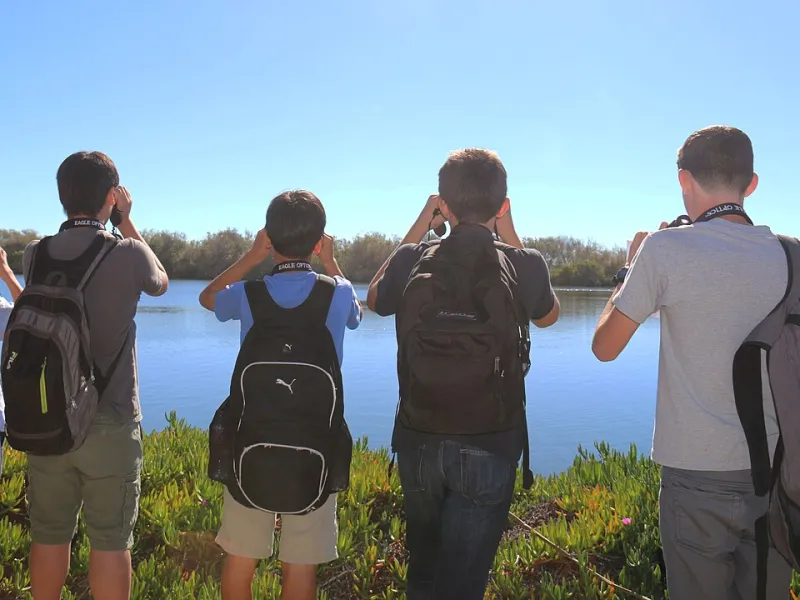
Photo: Ashley Spratt, photographer, US Fish and Wildlife Service. Pacific Southwest Region USFWS from Sacramento, US, Public domain, via Wikimedia Commons
There is a persistent assumption embedded in how many Americans think about academic achievement: that the student who masters material alone, who earns the highest individual score, who rises above the group — that student is succeeding. It is a compelling narrative, and not entirely without merit. Yet decades of research in cognitive science, developmental psychology, and educational practice suggest that this picture is, at best, incomplete.
At Marlton School, we have observed something consistently across grade levels and subject areas: students who struggle to demonstrate mastery in traditional, individually assessed formats often reveal extraordinary capability the moment they are placed in a well-structured collaborative environment. This is not a coincidence, and it is not charity. It is science.
What Happens in the Brain During Group Problem-Solving
When a student works alone on a challenging task, their brain engages a relatively contained set of cognitive processes — retrieval, reasoning, and self-monitoring among them. These are valuable. But when that same student works through a complex problem with peers, something neurologically distinct occurs.
Research published through institutions including Stanford's Social Neuroscience Laboratory has demonstrated that social engagement during learning activates the brain's reward circuitry in ways that solitary effort does not. The presence of others — specifically, others who are working toward a shared goal — increases dopamine release, which in turn heightens attention, motivation, and the consolidation of new information into long-term memory. In practical terms, students are more likely to remember what they learned together than what they studied in isolation.
Beyond memory retention, collaborative tasks require what cognitive scientists call "elaborative interrogation" — the process of explaining one's thinking to another person. When a student must articulate why they chose a particular approach, they are forced to examine the structure of their own understanding. Gaps become visible. Misconceptions surface. And crucially, peers often identify those gaps in language far more accessible than any textbook explanation.
The Students Who Surprise Everyone
Faculty at Marlton School have documented a pattern that surprises new teachers almost every year. A student who has been quiet during individual assignments, whose written work reflects minimal engagement, who has perhaps been labeled as disinterested or under-performing — that student, when placed in a team tasked with designing a solution to a real problem, becomes a different kind of learner.
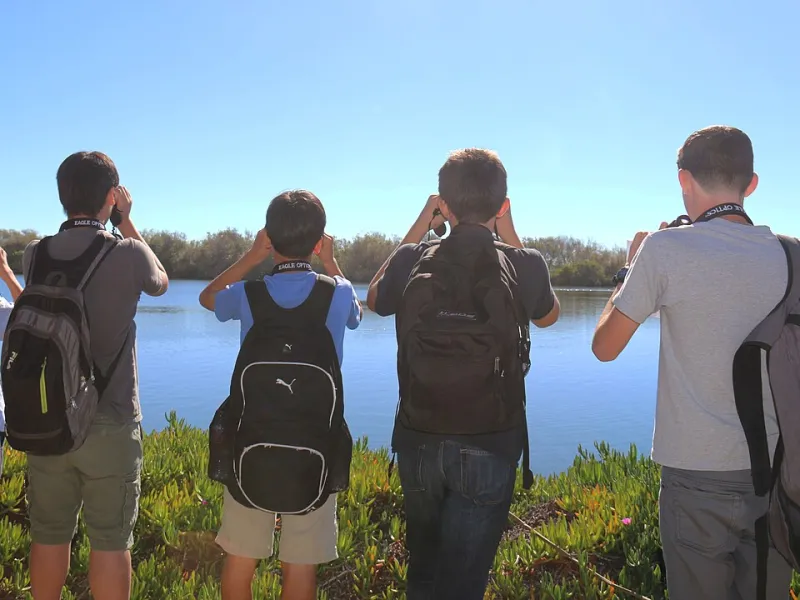
In one recent project-based unit in our middle school science program, students were asked to work in small groups to propose an environmental intervention for a local ecosystem challenge. One student, who had turned in incomplete lab reports for most of the semester, emerged as the team's primary strategist. He could not easily translate his thinking onto a worksheet. But when his team needed someone to hold the whole system in mind — to see how one decision affected another — he was irreplaceable. His teammates recognized it. More importantly, he recognized it.
This is not an isolated story. It reflects a well-documented phenomenon in educational research sometimes called the "hidden competence" effect: the idea that certain cognitive strengths — systems thinking, interpersonal coordination, creative synthesis — are simply invisible in conventional assessment formats but become apparent in collaborative, open-ended tasks.
Structure Is What Makes Collaboration Work
It would be a mistake to conclude that simply placing students in groups produces these outcomes. Unstructured group work can, in fact, reinforce existing hierarchies, reward the most vocal students, and leave quieter learners even further behind. The research is clear on this point: the benefits of collaborative learning are contingent on intentional design.
At Marlton, our teachers receive ongoing professional development in facilitated group learning structures. This includes the deliberate assignment of roles within teams — not to limit students, but to ensure that every member has a defined contribution and a genuine stake in the outcome. It includes the use of protocols that require each student to share their reasoning before the group reaches consensus. And it includes regular reflection checkpoints where students examine not just what they produced, but how they worked together.
This scaffolding serves a dual purpose. It makes the learning more equitable by distributing intellectual authority across the group. And it makes the social and emotional dimensions of collaboration explicit — something students can examine, discuss, and improve upon over time.
Skills That Individual Achievement Cannot Confer
There are competencies that no individual exam, no matter how well designed, can meaningfully assess. The ability to navigate genuine disagreement without disengaging. The discipline required to listen to a perspective that challenges your own conclusion. The judgment to know when to lead and when to follow. The capacity to build on someone else's idea rather than replace it.
These are not soft skills in the dismissive sense that phrase sometimes implies. They are the operational requirements of nearly every professional environment graduates will enter — from medicine to engineering to education to entrepreneurship. The student who has only ever been asked to perform alone arrives in those environments without practice in some of the most consequential skills the workplace demands.
Collaborative learning, properly implemented, is where those skills are built. Not described, not assigned as reading — built, through repeated practice under conditions that closely resemble the real demands of collaborative work.
A Different Definition of Academic Strength
Marlton School's academic philosophy holds that genuine rigor does not mean narrow rigor. A program that develops only the skills measurable by individual assessment is not a comprehensive education — it is a partial one. Our students are expected to demonstrate mastery of content knowledge, critical thinking, and written communication. They are also expected to develop the collaborative intelligence that allows them to apply those capacities in concert with others.
When families tour our campus and observe classrooms where students are working in teams — debating, building, revising, disagreeing productively — they sometimes ask whether this is the "academic" part of the day. The answer is yes. Entirely and emphatically yes.
The collaboration paradox, as educators sometimes call it, is this: the students who most need to discover their own academic identity are often the ones who find it not in solitude, but in the company of peers who depend on what only they can offer. At Marlton, we have built our classrooms to make that discovery possible — because we believe that knowing how to work alongside others is not separate from academic excellence. It is one of its highest expressions.