Voices in the Room: Building Classrooms Where Every Student Finds the Courage to Speak
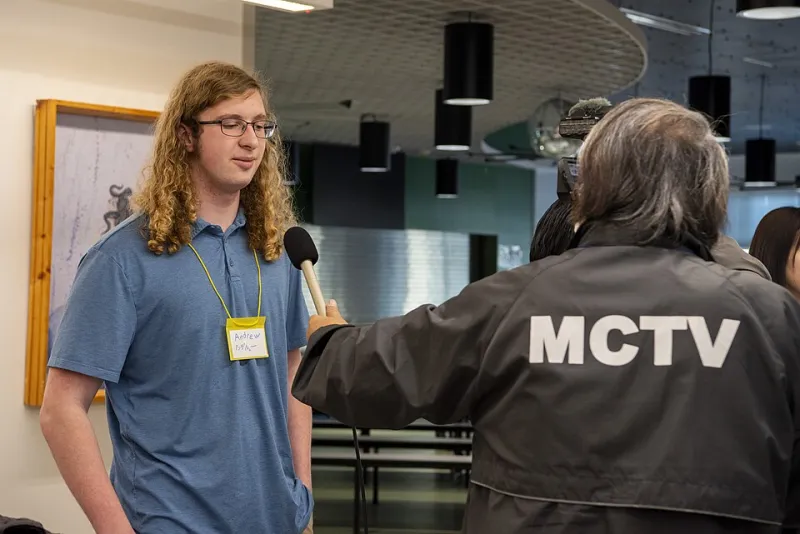
Photo: U.S. Air Force photo by Staff Sgt. Brieana Bolfing, Public domain, via Wikimedia Commons
Walk into a discussion-based classroom at its best, and you will witness something remarkable: ideas colliding, questions sparking new questions, and students constructing understanding together in real time. Walk into one at its worst, and you may notice something equally telling—a handful of eager hands in the air while a larger group of students stare at their desks, willing themselves invisible.
That divide is not a reflection of intelligence or effort. It is a reflection of confidence, temperament, and the degree to which a student feels psychologically safe in the room. Understanding why that gap exists—and what skilled educators can do to close it—is one of the most important conversations happening in American schools today.
Why Some Students Flourish and Others Freeze
Research in educational psychology consistently identifies several factors that predict whether a student will participate actively in open discussion formats. Extroversion is the most obvious, but it is far from the only variable. A student's prior academic experiences, family communication styles, cultural background, and neurological wiring all shape how they respond when a teacher opens the floor.
For introverted students, the issue is rarely a lack of ideas. Studies by psychologist Susan Cain and her colleagues have documented that introverts frequently process information deeply and arrive at nuanced conclusions—but they do so internally, and they often need more time before they feel ready to speak. When a classroom rewards speed and spontaneity, introverted learners are structurally disadvantaged, not intellectually inferior.
For students with anxiety disorders—which affect an estimated 31 percent of American adolescents, according to the National Institute of Mental Health—the stakes of speaking publicly feel genuinely threatening. The anticipatory dread of being called on, of saying something wrong in front of peers, can consume so much cognitive bandwidth that the student has little mental energy left for actual learning.
Neurodivergent students, including those with ADHD, autism spectrum disorder, or auditory processing differences, often face additional layers of complexity. A student with ADHD may have a vivid thought that evaporates before they can organize it into words. A student on the autism spectrum may struggle to read the conversational cues that signal when it is appropriate to contribute. These are not failures of engagement; they are differences in processing that thoughtful classroom design can accommodate.
The Concept of Psychological Safety—and Why It Changes Everything
Harvard Business School researcher Amy Edmondson popularized the term "psychological safety" in organizational contexts, but its application to K–12 classrooms is profound. When students believe that taking intellectual risks will not result in ridicule, dismissal, or social penalty, they are significantly more likely to engage. When they are unsure, they default to silence as self-protection.
Creating psychological safety is not simply a matter of being kind. It requires deliberate, consistent structural choices that communicate—through action, not just words—that every contribution has value.
Strategies That Make a Measurable Difference
Think-Pair-Share as a Confidence Bridge
One of the most research-supported participation structures is the think-pair-share model, in which students first formulate their thoughts privately, then test those ideas with a single partner before sharing with the larger group. This sequence dramatically reduces the cognitive and social risk of public participation. By the time a quieter student speaks to the class, they have already rehearsed their idea and received at least one peer's affirmation. The result is not just more voices in the discussion—it is more thoughtful contributions from all students.
Wait Time: The Underestimated Power of Silence
Decades of research by educator Mary Budd Rowe established that extending the pause after asking a question—from the typical one second to three to five seconds—produces significant gains in the length, accuracy, and complexity of student responses. It also broadens participation, giving students who need more processing time the opportunity to formulate a genuine response rather than watching faster processors claim the floor. This single, costless adjustment changes who gets to be heard.
Multiple Modalities for Contribution
Discussion need not mean only verbal exchange. Written discussion boards, anonymous digital response tools, structured debate formats, and small-group fishbowl conversations all create alternative pathways for students to contribute their thinking. At Marlton School, educators intentionally vary the modes through which students engage with course material, recognizing that a student who struggles to speak extemporaneously in front of twenty peers may produce a genuinely sophisticated written argument that advances the entire class's understanding.
Explicit Norm-Setting Around Intellectual Risk
Teachers who are most effective at drawing out reluctant participants do not simply tell students that mistakes are acceptable—they model intellectual vulnerability themselves. Saying "I'm not certain about this—let me think through it with you" or "That question is pushing my thinking in a direction I hadn't considered" signals to students that uncertainty is a legitimate part of learning, not a source of shame.
Equally important is how teachers respond when a student's contribution is incomplete or incorrect. A response that honors the attempt while gently redirecting—"That's an interesting starting point; what happens if we push that idea a little further?"—keeps the student in the conversation rather than signaling that they should disengage.
Proactive Relationship-Building
For students with significant anxiety or social communication differences, brief private check-ins before class can be transformative. A teacher who quietly lets a student know, "I'd love to hear your thoughts on today's opening question—no pressure, but I'll give you a nod when I think you're ready," provides a scaffolded entry point that respects both the student's needs and their capacity to contribute.
The Role of Peer Culture
No teacher strategy operates in isolation. The willingness of students to take intellectual risks is also shaped by the culture their peers have collectively created. Schools that invest in community-building activities, collaborative projects, and explicit social-emotional learning curricula tend to produce classrooms where students genuinely support one another's participation rather than competing for dominance.
At Marlton School, building that culture is understood as an academic priority, not a peripheral concern. When students trust each other, the discussion becomes richer for everyone—including those who have always been comfortable speaking and those who are finding their voice for the first time.
Every Voice Strengthens the Whole
The goal of discussion-based learning is not to reward the most confident speakers. It is to surface the full range of human thinking that exists within a classroom—including the careful, considered perspectives of students who need a moment to gather their courage before they share them.
When educators design with intention, every student in the room becomes a contributor. That is not just good pedagogy. It is a foundational act of respect for the intellectual potential every student carries through the door.