The Stories We Tell About Math: Why Families Should Keep Academic Identity Open

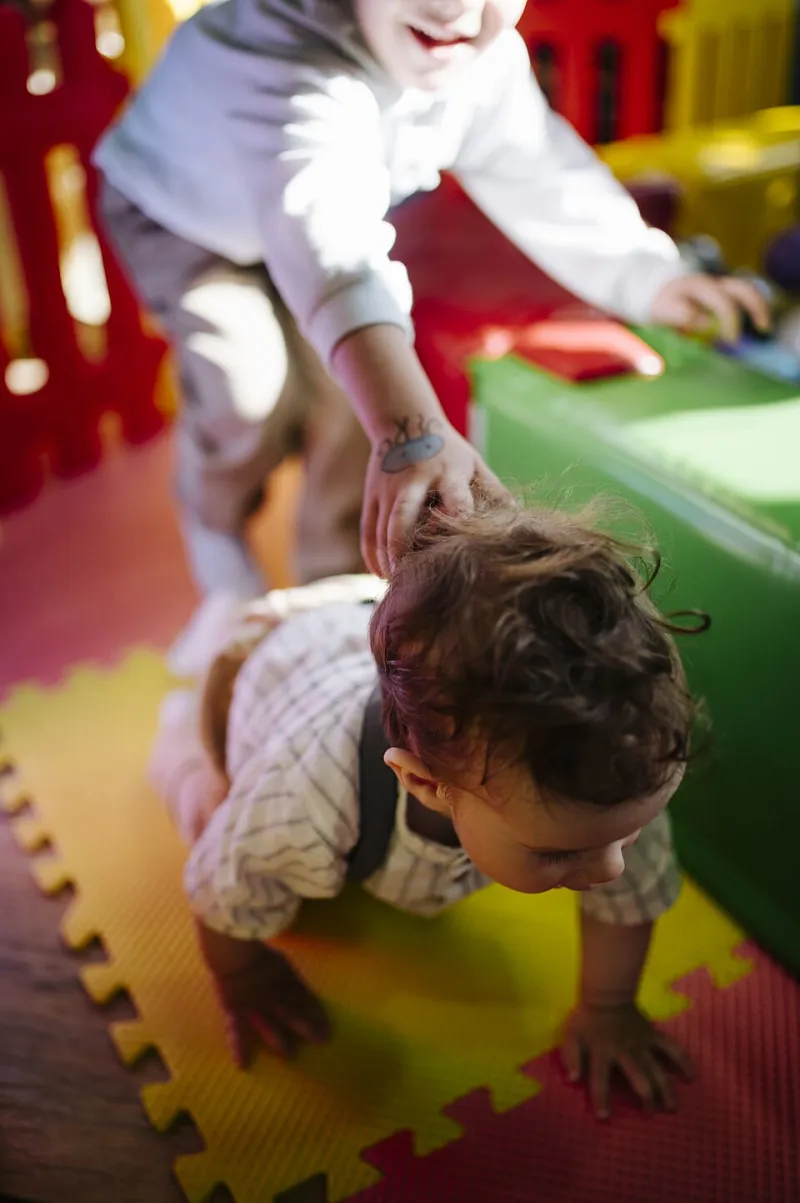
Photo by Photo by Vitaly Gariev on Unsplash on Unsplash
Adults say it casually, often with a shrug: I was never a math person. The remark is meant to be modest. For a child listening, it can become a story about who belongs in mathematics and who does not. At Marlton School, we do not believe that language alone determines achievement. Instruction, practice, sleep, prior knowledge, and teacher support all matter. But the words families use at the kitchen table are part of the environment in which academic identity forms. They deserve more care than they usually receive.
The Label That Travels
A label about math ability is rarely contained to one evening. Children hear it, file it away, and repeat it when work becomes difficult. I am not a math person can function as an explanation, an excuse, and a prediction. It tells a child that struggle is evidence of a fixed trait rather than a sign that a strategy is missing or a concept has not yet clicked. The same dynamic can appear in reading, writing, science, and music. Mathematics is simply where the label is most common and most socially acceptable.
Why Math Labels Stick
Mathematics is often taught and discussed as if it were a hierarchy of natural talent. Speed is praised. Correct answers are celebrated. Children who need an extra explanation can conclude that they are on the wrong side of a dividing line. Research on mindset and belonging suggests that students are more willing to persist when they understand ability as developable and when they feel that they belong in the learning community. That does not mean effort alone is enough. It means the story a child tells about difficulty can affect whether they ask for help or quietly withdraw.
Three Messages to Send
First, difficulty is information. When a problem is hard, it is telling us where to look, not who the child is. Second, strategy matters more than speed. A student who tries a diagram, a simpler example, or a question to the teacher is doing real mathematical work. Third, belonging is not a fixed trait. A child can belong in a math class while still learning the material, just as a musician can belong in an ensemble while still practicing a difficult passage.
Phrases Families Can Retire
Some well-meant comments close doors. I was never good at math either, said with a sigh, can suggest that the family has no useful role in the subject. You are just like me can turn a temporary struggle into an inheritance. Some people are math people implies a fixed club. Math is not your thing may be intended to reduce pressure, but it can also reduce expectation. Even You are so smart at this can backfire when the work becomes hard, because it ties worth to ease rather than to learning.
Phrases That Keep Identity Flexible
Try language that names the moment rather than the person: This is hard right now. What have you tried? Let us look at one example together. Ask: How did your teacher explain it? Can you show me the part that makes sense? Say: Math is a set of ideas you can build, not a talent you either have or lack. Add: You belong in this class, and you can ask for help. When a child makes a mistake, try: That mistake shows us where to look next. When a child succeeds, notice the process: You tried a different strategy and kept going.
Keep the Conversation Specific
Global statements about identity are less useful than specific observations. Instead of asking whether your child is good at math, ask what they are studying, where they get stuck, and what helps. Instead of comparing them to a sibling or to your own school experience, ask the teacher what a next step would look like. If you did not learn mathematics in the way it is now taught, say so without turning it into a verdict: I learned it differently, so let us figure this out together. That models curiosity rather than resignation.
The Story Can Stay Open
Academic identity is not a fixed label stamped on a child in elementary school. It is a working story, revised as skills grow and experiences accumulate. Families cannot control every message a child hears, but they can make the home a place where difficulty is discussable, help is normal, and no subject is closed off by a casual sentence. The goal is not to promise that every child will love mathematics. It is to keep the door open long enough for the child to decide for themselves.