Between Home and Homeroom: Unlocking the Hidden Lessons of the Daily Commute
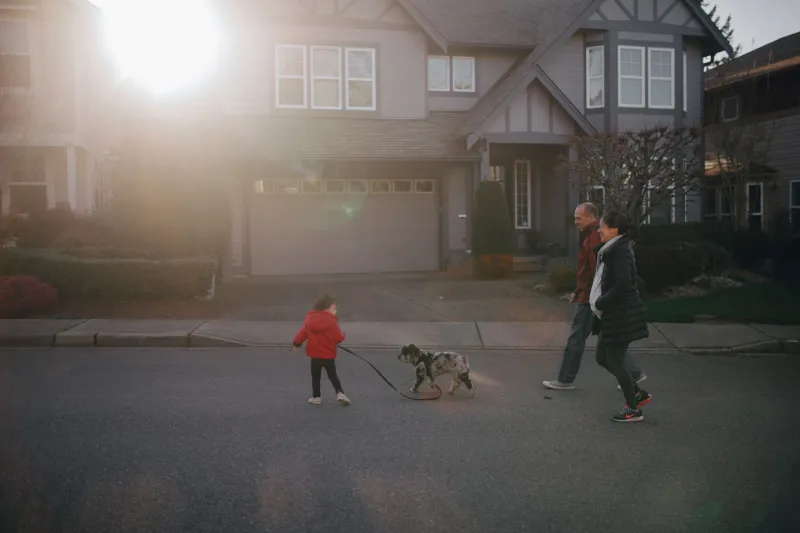
Every school day, millions of American families make the same trip: down the driveway, around the corner, onto the yellow bus or into the minivan line. The commute is usually framed as logistics—a task to complete before the real work of learning begins. But a growing body of cognitive research, along with the everyday experiences of families at Marlton School, suggests a different framing. The twenty minutes between the front door and the schoolhouse steps may be among the most developmentally valuable time a child spends all day.
Why Transit Time Works Differently Than Structured Learning
Psychologists who study attention have long noted that the brain does some of its best processing when it is not being directly instructed. On a walk to school, a child's mind is free to wander—and that wandering is not idle. Researchers refer to this as "spontaneous thought," a mode in which the brain consolidates memories, processes emotions, and quietly rehearses new ideas.
Unlike the classroom, the commute carries no performance pressure. There is no hand to raise, no grade at stake. That low-stakes quality makes children unusually open: to questions, to observations, to talking about things that happened yesterday or worries that might surface tomorrow. Parents often report that their most honest conversations with their children happen in the car, precisely because neither person is making eye contact and neither is in a hurry to conclude anything.
The Commute as an Observation Classroom
Consider what a child actually encounters on the way to school. Seasonal changes in the trees. Construction crews and the geometry of their equipment. A neighbor's dog that barks every morning at the same time. A bus route that passes the same bakery, the same storefronts, the same crosswalk guard.
Each of these is an invitation to notice, and noticing is the root of scientific thinking. A parent who asks, "Do you think that crane is taller than the church steeple?" or "Why do you think the leaves turned on this street before ours?" is doing something educators call "sparking productive curiosity"—posing a genuine question without demanding an answer, letting the child's mind do the lifting.
Families who walk or take public transit have a natural advantage here: the pace is slower and the sensory world richer. But car families can replicate the effect. Simple rituals work—a rotating "scavenger hunt" question at pickup, or a standing game of predicting what will be different on the route tomorrow.
Emotional Processing on the Move
There is a second, quieter benefit. The commute offers a decompression window that few other parts of the day provide. On the ride home, a child who had a hard recess or a disappointing quiz score has time to settle before facing questions at the kitchen table. Child development specialists often advise parents to resist the urge to open with "How was school?"—a question so broad it usually produces a shrug. The commute offers better conditions: side-by-side seating, shared scenery, and no audience.
Some families find success with narrower prompts. "What was the strangest thing that happened today?" or "Who did you sit with at lunch?" invite stories rather than summaries. Over time, these small exchanges build something larger: a child's sense that their inner life is welcome in the family conversation.
Practical Ways to Enrich the Journey
For parents looking to make the most of transit time, educators suggest a few low-effort practices:
- Narrate the neighborhood. Point out local landmarks, street names, and history. Children absorb civic geography long before they study it.
- Keep an audio tradition. A short podcast, an audiobook chapter, or a family playlist can become a shared reference point—and a conversation starter for days.
- Practice the pause. Allow a few minutes of silence after pickup before speaking. Let the child decompress first.
- Ask forward-looking questions. "What are you hoping happens tomorrow?" gently surfaces anxieties and excitements alike.
- Let the child lead. Some of the best commute conversations begin with the child's own observation. Follow it.
A Counterpart, Not a Replacement
None of this is an argument that the commute substitutes for formal instruction. Classroom learning—structured, sequenced, and social—remains the heart of a child's education. But the hours between home and homeroom form a natural counterpart: unstructured, relational, and rich with the raw material that classroom learning later organizes.
At Marlton School, we see families arrive each morning carrying the residue of that journey—the questions asked at the crosswalk, the stories told in the back seat. We consider it part of the curriculum too. The walk to school is not time lost. Handled with a little intention, it may be the most underrated learning hour a child has.